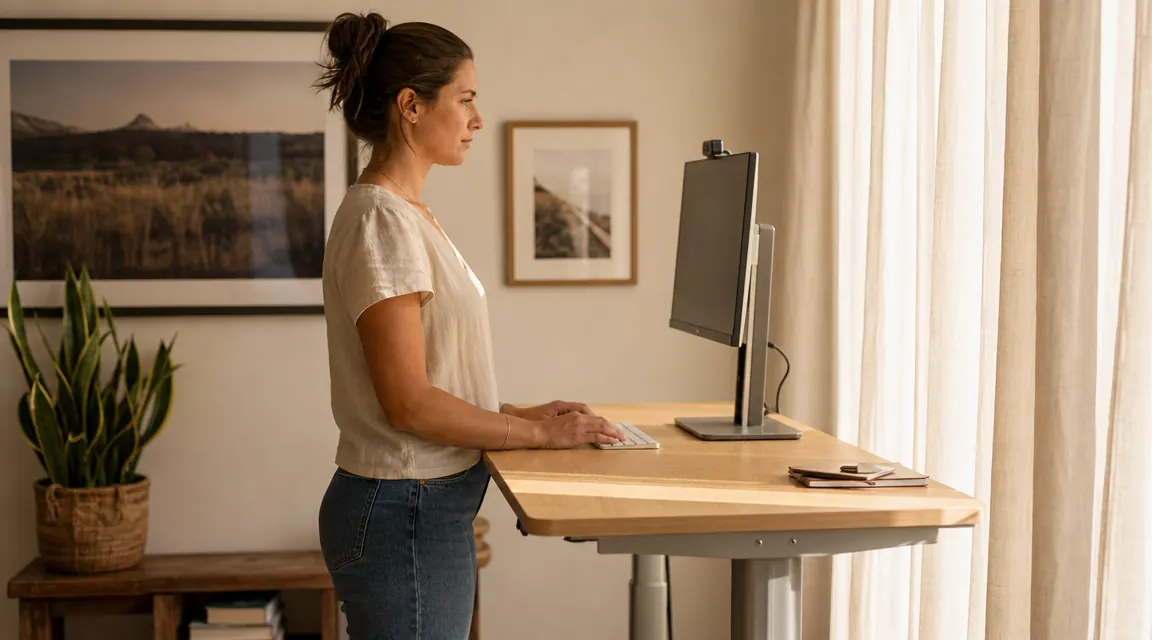
I work three twelve-hour nursing shifts a week, and then I come home and chart for another two hours at my desk. For a long time I did that in a folding chair at a table I bought in 2019. By 10 PM my lower back felt like someone had wrung it out. I assumed that was just the job.
Then I switched to an electric sit-stand desk, specifically the ErGear Height Adjustable Electric Standing Desk, and something changed. Not just in my back. In my focus, my mood after charting, and how alert I felt during that first hour at the desk. I have been using it for six weeks now and I want to break down exactly what it does, benefit by benefit, because most articles only talk about posture.
Tired after sitting all day? This is the desk most home office workers switch to first.
The ErGear Electric Standing Desk has four memory presets, a smooth dual-motor lift system, and a 48x24 inch surface that fits most home office corners. Over 11,000 reviews and a 4.5-star rating on Amazon.
Amazon Check Today's Price on Amazon →It breaks the sitting-slump cycle that kills your afternoon energy
When you sit for three or four hours without moving, your body reads it as a rest signal. Blood pools, your core disengages, and your brain gets less oxygen-rich circulation. Standing for even 20 minutes interrupts that signal. The ErGear lets you switch with one button press, so there is no friction between the thought and the action. You do not have to drag a stool over or set a timer. You just press the preset you saved at your standing height and keep working.
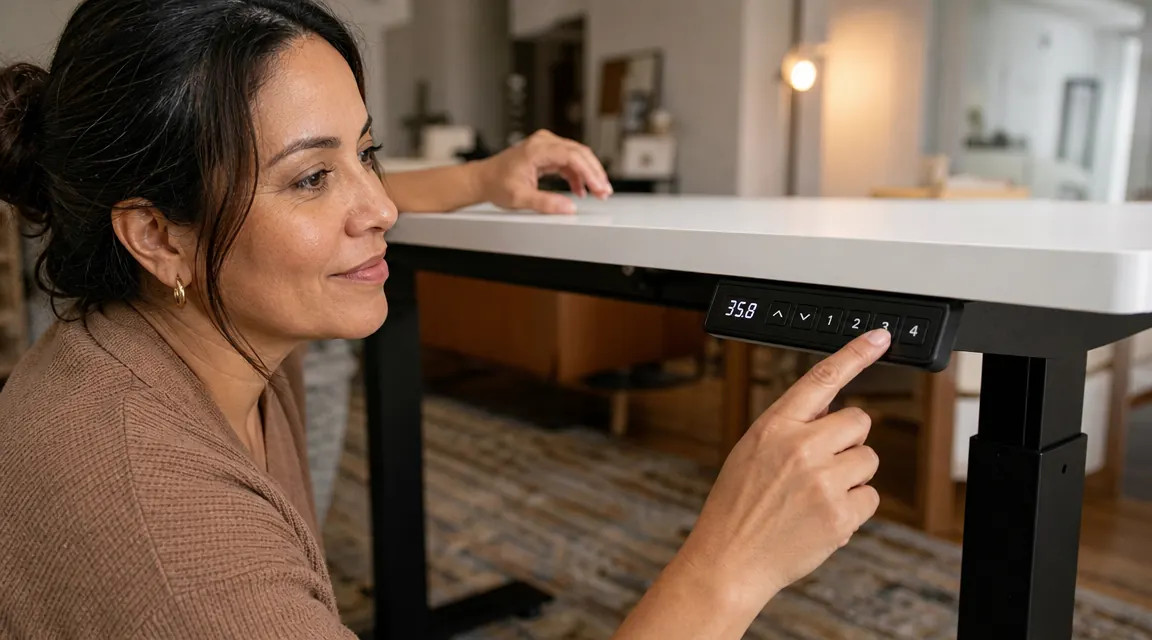
Memory presets eliminate the excuse not to switch positions
The biggest reason people stop using a sit-stand desk is friction. If raising the desk takes 45 seconds of holding a button while you wait, you stop doing it. The ErGear has four programmable presets. I have preset 1 set to my exact seated height and preset 2 set to my standing height. The transition takes under five seconds. That sounds like a small thing, but it is the reason I actually use the standing function every single session instead of forgetting it exists.
Standing sharpens your focus on tasks that need real attention
I noticed this during charting specifically. When I stand at the desk, I make fewer re-reads of the same sentence. I catch errors faster. There is something about the body being alert that keeps the mind from drifting. Research on this is mixed, but my personal experience over six weeks is consistent: standing during the tasks that require concentration produces cleaner work for me than sitting does. It is not magic, it is just that your physical state is not fighting against your mental state.
It reduces the tension headaches that come from neck-forward posture
When you sit at a fixed desk and your monitor is too low, your head tilts forward. That forward head position loads your neck muscles unevenly, and over a two-hour session it can translate into a headache behind the eyes or at the base of the skull. When I stand, I naturally look straight ahead. My monitor stays at eye level. The ErGear's height range goes from 28.3 to 47.6 inches, which covers most people's standing eye-level range. Getting that relationship right between your eyes and the screen changes how your neck and shoulders feel by the end of the session.
By the third week I realized I was finishing my charting 15 minutes faster than I used to. I think I was just less distracted by my own discomfort.
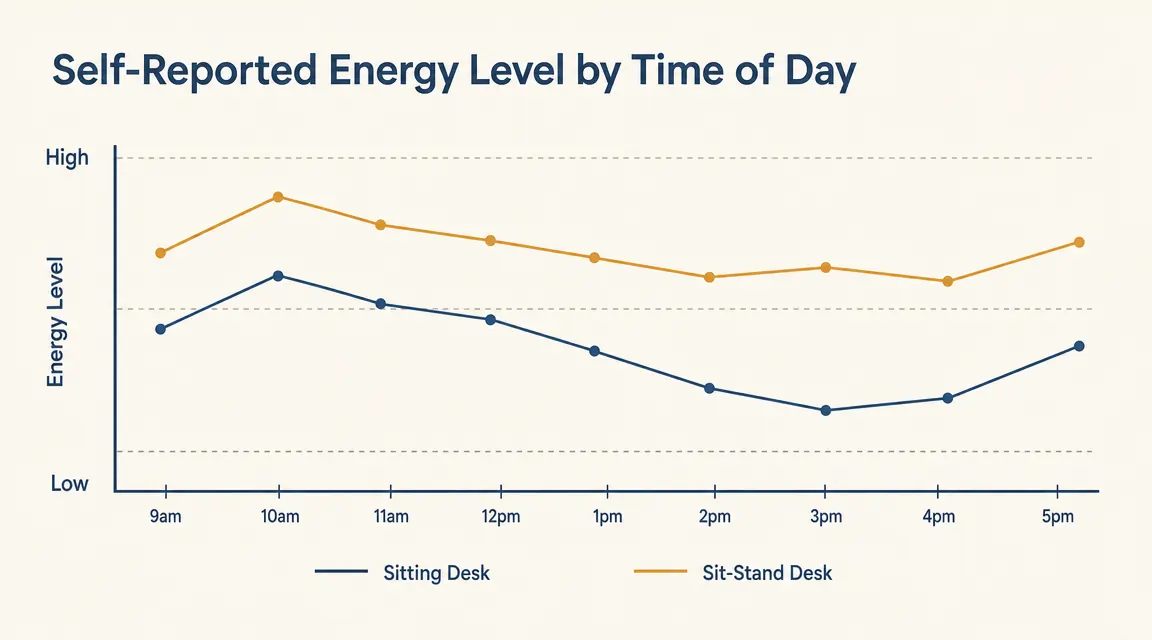
It stops you from compulsively checking your phone during low-energy gaps
This one surprised me. When I sit and feel that 3 PM slump, my instinct is to reach for my phone. A few minutes of scrolling turns into 20. Standing creates a mild physical engagement that seems to satisfy whatever the restlessness is before it becomes a distraction spiral. I do not know the neuroscience of it, but it is consistent. Standing at the desk during a low-energy gap keeps me at the desk. Sitting during the same gap often does not.
The 48x24 inch surface gives you real working space, not a cramped ledge
Some sit-stand desks are sold at a smaller surface size than you realize until it arrives. The ErGear's 48x24 inch desktop fits my monitor, a keyboard, a small lamp, and still leaves room for a notepad. I chart from paper notes before entering them digitally, so that space matters. The surface also has a carbon fiber texture that wipes clean easily, which as a nurse I appreciate more than most people probably would.
Quieter motor means you can raise it without waking anyone up
My kids go to bed around 8:30 and I do most of my evening charting between 9 and 11. Noise matters. The ErGear runs a dual-motor lift at around 45 decibels, which is roughly the volume of a quiet conversation. I have raised it at 10 PM without waking my youngest. That sounds like a minor spec until you are actually trying to switch positions silently in a sleeping house.
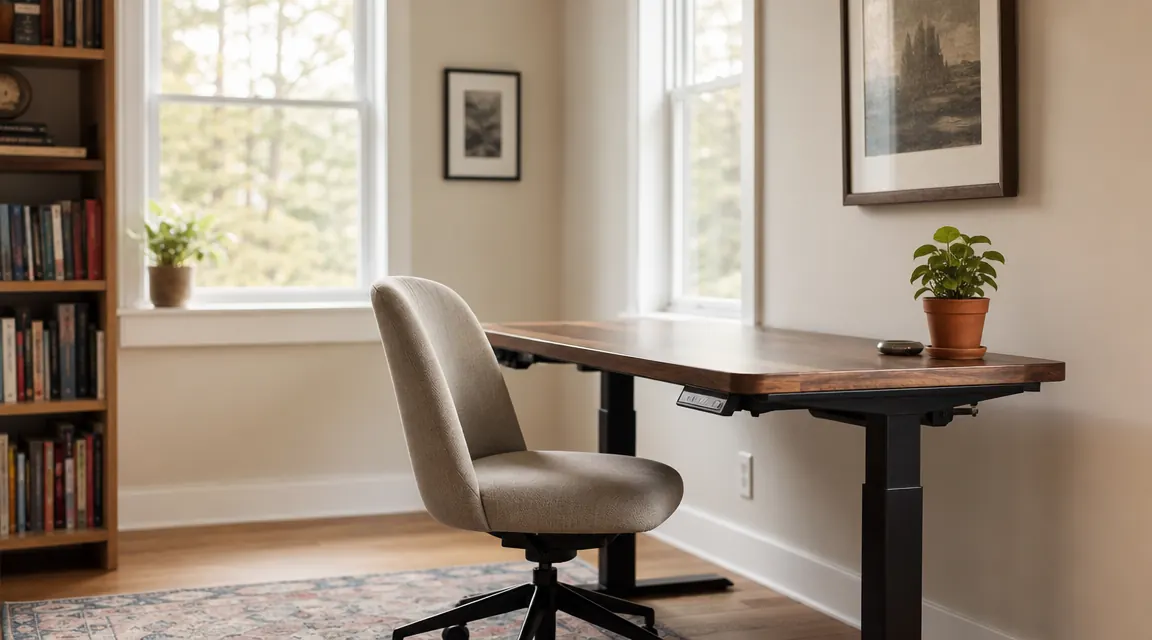
Standing after meals keeps the post-lunch fog from landing
If you work right through lunch or eat at your desk, that blood sugar dip around 1 to 2 PM hits harder when you are sitting still. Standing after a meal keeps your body in a mild active state that blunts the fog. I do 20 to 30 minutes of standing immediately after eating on the days I am working from home, and the difference in how I feel at 2 PM compared to my old sitting routine is significant. The desk makes this habit easy because the transition costs nothing.
It helps you decompress from a stressful shift without zoning out entirely
After a hard shift I used to sit at the desk and feel stuck between needing to finish charting and needing to decompress. Sitting felt like just extending the shift. Standing created a slight shift in how my body processed the transition. I was still working but I was not in the same physical position I had been in all day. It is a small psychological boundary between the shift and the home task. I do not know how to explain it better than that, but nurses and remote workers who spend their days moving or sitting in the same position will probably understand what I mean.
You stop dreading the desk, which makes you more consistent overall
This is the one I did not expect. Before the ErGear, I associated sitting at my desk with lower back tightness, fatigue, and a general sense of dread about getting through the charting. Now I do not. The desk is comfortable. I have options for how I use it. That small shift in how I feel about the desk changed how consistently I sit down to do the work. I procrastinate less. I finish faster. And I feel better when I am done. That is the actual return on a good home office setup: not just comfort, but showing up for the work without fighting yourself first.
What I Would Skip Instead
Desk risers. I tried one for about four months before the ErGear. They make your monitor taller but they do not raise your entire workspace, so your keyboard stays at sitting height and your arms end up at an awkward angle. They also cannot come back down without lifting everything off them. A fixed riser gives you one position, not two. The electric desk costs more upfront but it solves the actual problem, not just part of it. If you want the full breakdown of how the ErGear performs over time, read the long-term review.
If you are thinking about adding a standing routine but are not sure how to structure it, the guide on building a sit-stand schedule that actually sticks walks through exactly how to start without overdoing it in the first week.
If even one of these ten things sounds like your day, the ErGear is worth a serious look.
It is the desk I use every evening. The memory presets make the sit-stand habit easy to keep, the motor is quiet enough for a sleeping house, and the surface fits a real workstation. Over 11,000 reviews on Amazon at a 4.5-star average.
Amazon Check Today's Price on Amazon →